What is counselling?
A counsellor is someone who works alongside you to make sense of what’s happening in your life, explore your thoughts and feelings, and support you to move forward in ways that feel right for you. Counselling offers a safe and confidential space where you can speak openly, reflect honestly, and be heard without judgement.
You are the expert in your own life. My role is to support you to understand yourself more deeply, strengthen your inner resources, and build practical ways of coping, relating, and responding to challenges.
Unlike advice-giving or coaching, counselling is not about being told what to do – it’s about working together to develop insight, resilience, and meaningful change.
What is my counselling style?
I work from a pluralistic, person-centred approach and practice in a trauma-informed way, which means I prioritise emotional safety, choice, collaboration, and respect throughout our work together. We will explore what matters to you, reflect on what’s working, and notice what you might want to change.
My work is grounded in Relational-Cultural Therapy, so I pay attention to relationships, connection, and the social and cultural context of your life. Depending on what feels most helpful, I may integrate Narrative Therapy, Creative Expressive approaches, Cognitive Behavioural Therapy (CBT), Transactional Analysis (TA), Problem Solving Therapy, and Te Whare Tapa Whā.
In practice, this means sessions might involve talking things through, noticing patterns, developing practical skills, strengthening emotional awareness, and – when helpful – using art, sand play, craft, or music to explore thoughts and feelings in ways that go beyond words.
For in-person sessions, I have the flexibility to include more creative exploration, which can work especially well for children, neurodiverse clients, and adults who prefer hands-on or experiential ways of expressing themselves.
My goal is to create a supportive, respectful space where you feel understood and empowered to grow in ways that feel authentic and sustainable.
Children and Young People
When working with children and young people, my therapeutic framework remains the same – grounded in safety, collaboration, and respect – however, the way sessions look and feel is developmentally tailored.
I meet each child where they are. I follow their lead, paying close attention to how they communicate and what helps them feel safe and engaged. For children under 12, this often includes creative and play-based approaches such as art, craft, role play, storytelling, and using metaphors from books, games, or characters they connect with. These approaches allow children to express complex thoughts and feelings in ways that feel natural and manageable.
When working with teenagers, I offer the same level of respect and autonomy I would give an adult, while also recognising that adolescence is a unique developmental stage. Sessions balance honest conversation, skill-building, and emotional support, with an awareness that identity, impulse control, and decision-making are still evolving.
Counselling Space
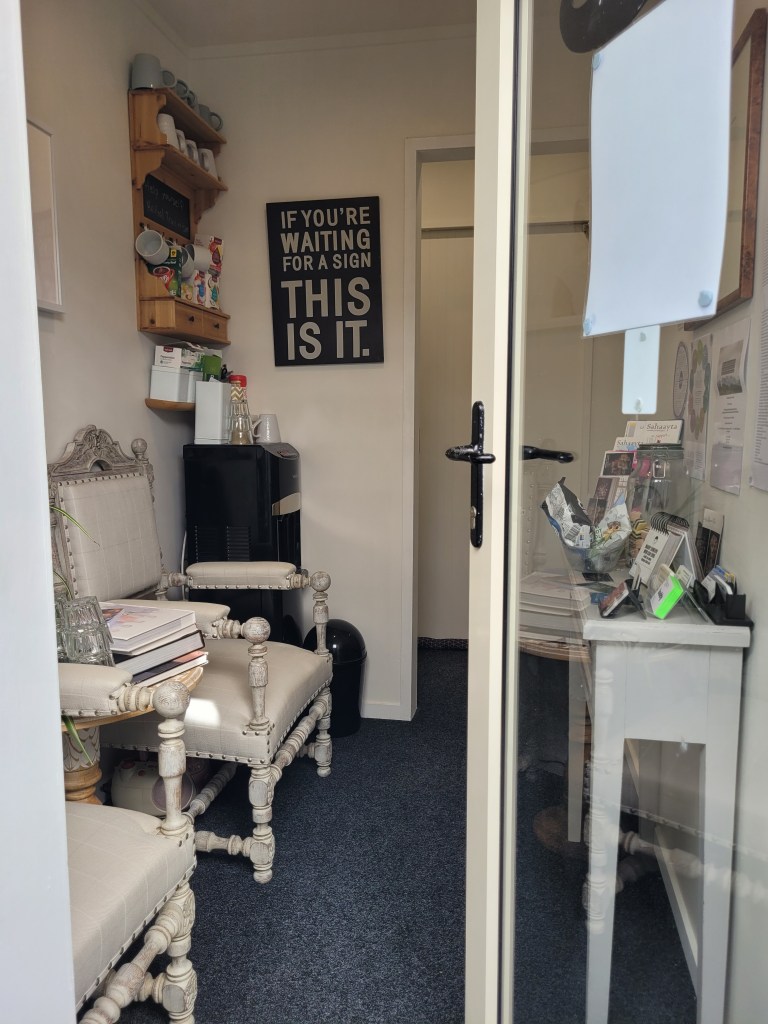
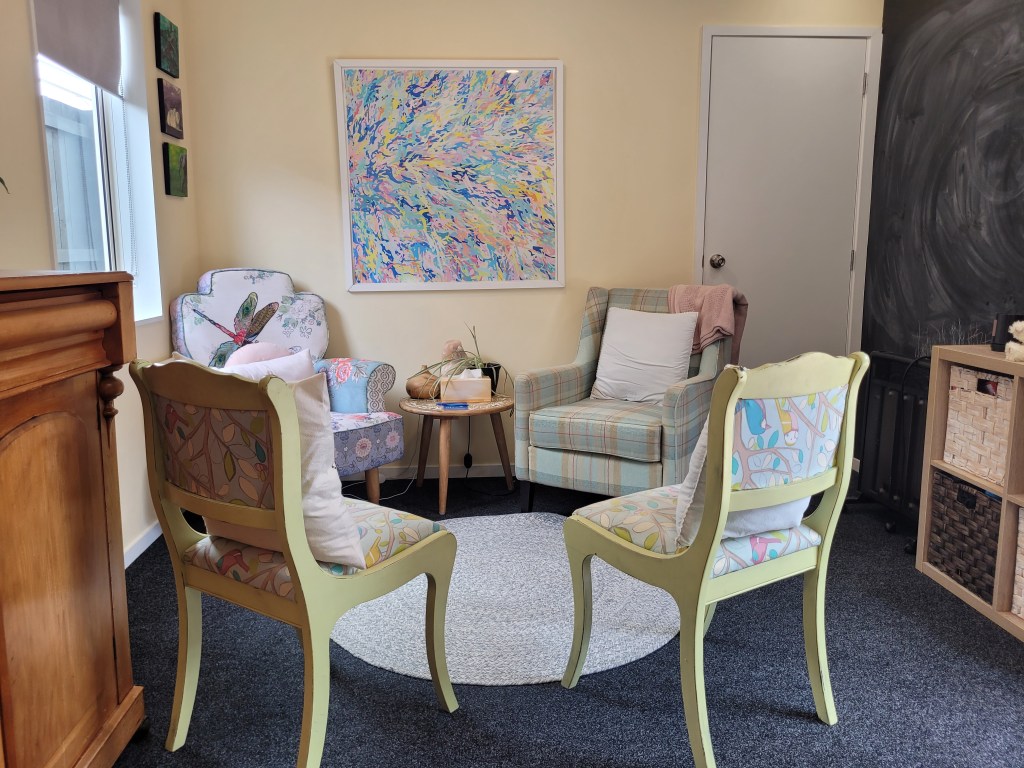
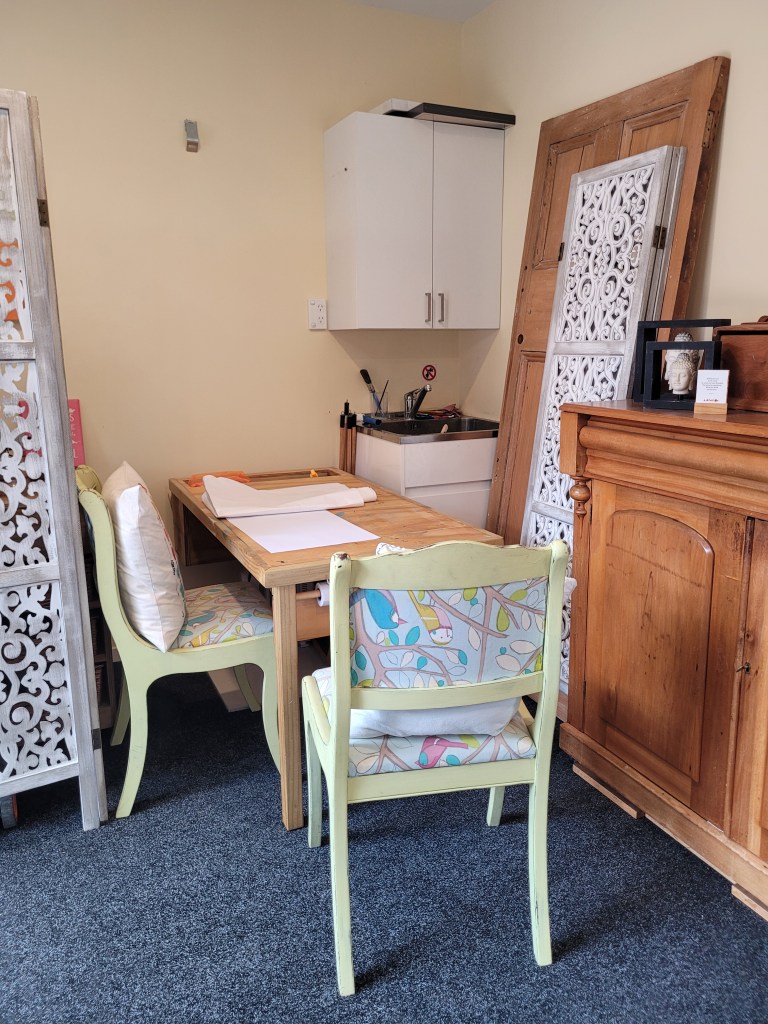
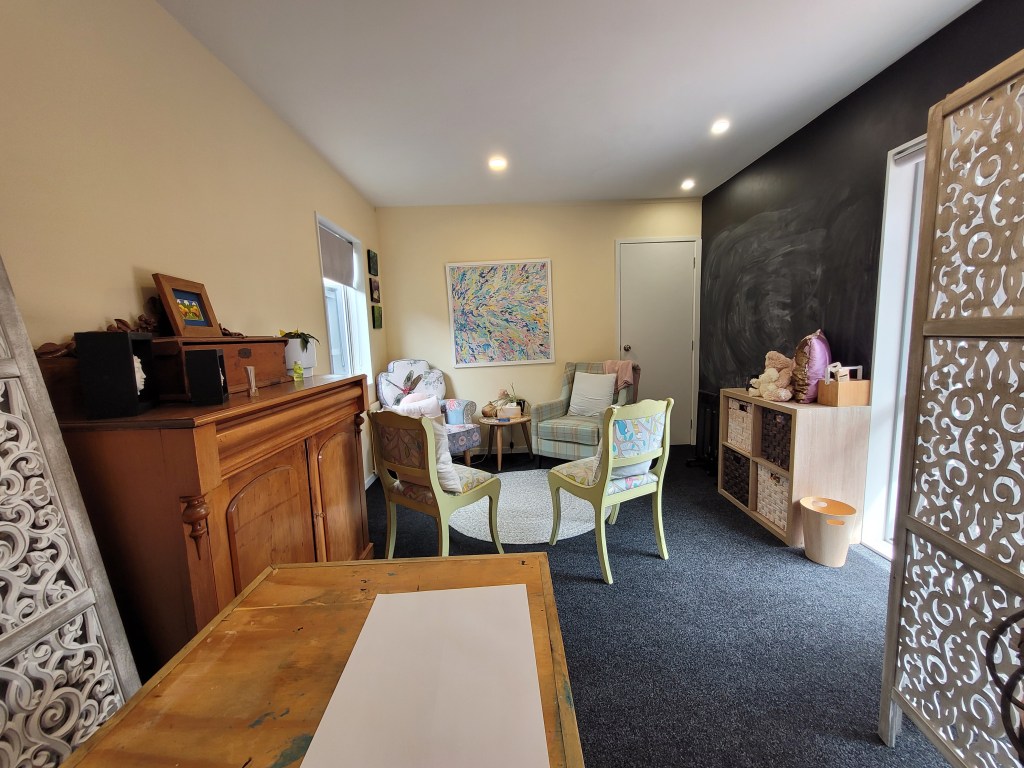
We have 3 counselling rooms, I mainly use the larger room as pictured, which also has access to an art table, sand tray, and toys. We have a waiting room with a few snacks, water, and coffee. There is plenty of street parking.
Counselling method terminology
Below is a brief overview of the approaches I may draw on in our work together. You don’t need to know or decide on any of these. I’ll explain what might be helpful for you and your situation, and we’ll decide together what feels right.
Relational-Cultural Therapy
Focuses on how relationships, connection, and cultural context shape our sense of self and wellbeing.
Narrative Therapy
Explores the stories we carry about ourselves and helps strengthen the ones that support growth and possibility.
Creative Expressive Approaches
As an artist, creativity is a natural part of how I work, but only if it resonates with you. Sessions can include art, craft, music, or sand play to help explore thoughts and feelings, particularly helpful for children, neurodivergent clients, or when words are hard to find.
Cognitive Behavioural Therapy (CBT)
Looks at how thoughts, feelings, and behaviours influence each other, and offers practical tools to manage anxiety, low mood, or unhelpful patterns.
Transactional Analysis (TA)
Helps make sense of communication styles and relationship dynamics so you can respond more intentionally.
Problem Solving Therapy
Provides structured, practical steps when you feel stuck or overwhelmed.
Te Whare Tapa Whā
A holistic Māori model of wellbeing that recognises the importance of well-rounded mental, emotional, physical, spiritual, and whānau health.
Ecotherapy
Draws on the healing qualities of nature. When appropriate, this may include incorporating natural elements or outdoor-based reflection to support regulation, perspective, and connection.
 Yvette SG Counselling - Central East Auckland counsellor for Children, Teens & Adults